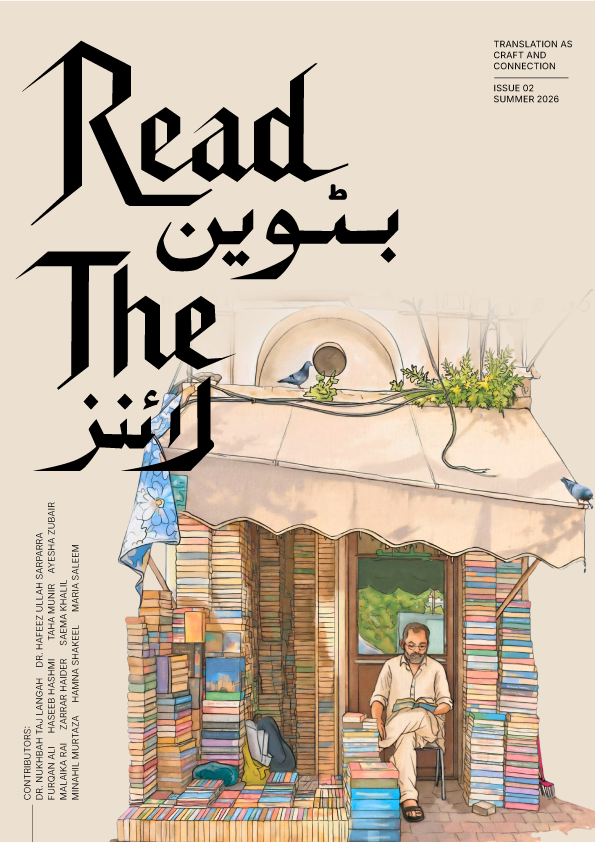

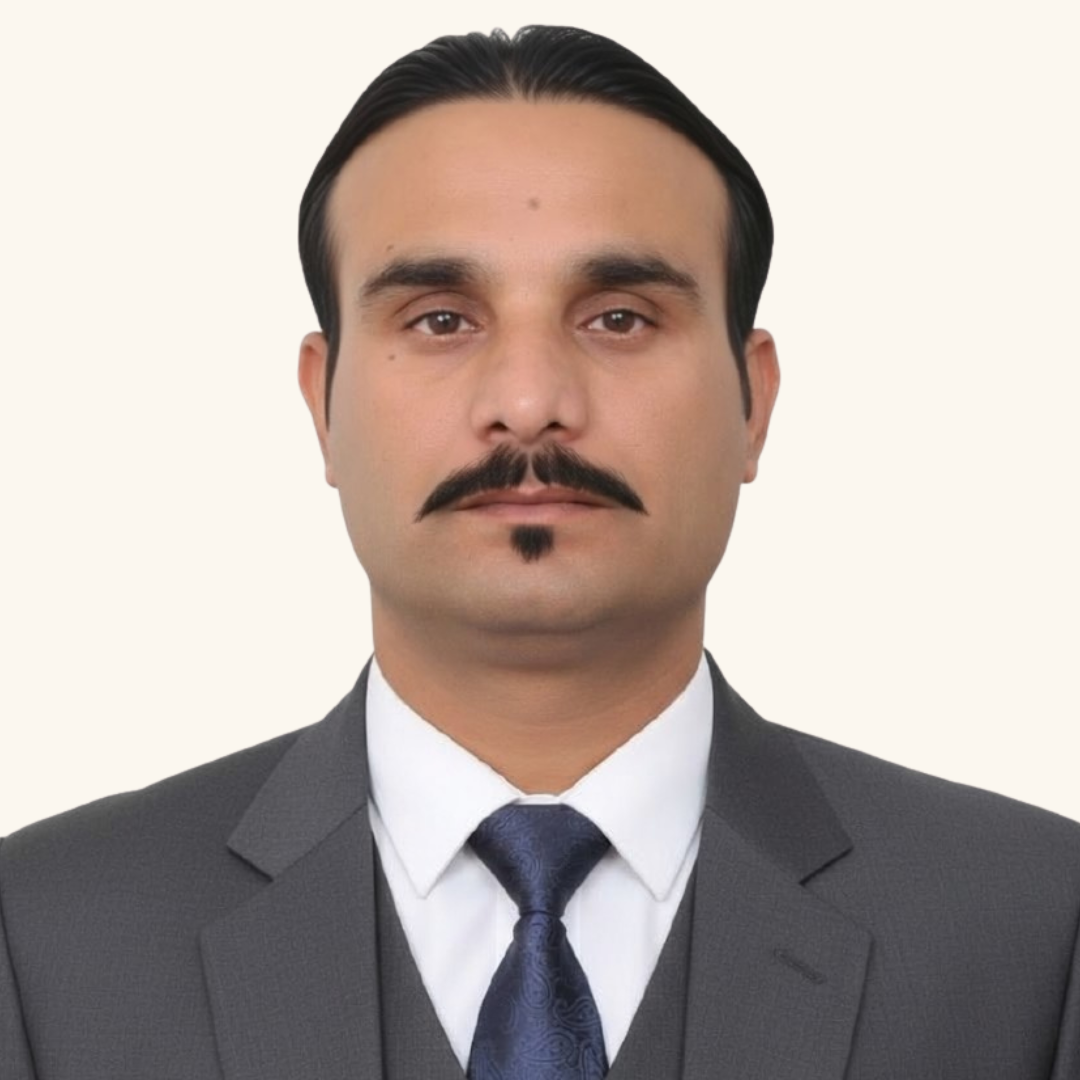
Dr. Hafeez Ullah Sarparra’s work caught our interest as we were researching the regional languages of Pakistan for issue 2 of Read Between The Lines magazine. Our curiosity piqued because of his editorial work for Duncan Dixey’s Brahui dictionary. With a doctorate in Brahui from the University of Balochistan, Dr. Sarparra’s literary contributions have made him a central figure, amongst others who are working tirelessly to preserve the linguistic heritage of the Brahui language in Pakistan. Not only is he a distinguished scholar of Brahui, Dr. Sarparra is also a scholar of the Persian and English languages. His academic affiliation is with the National University of Modern Languages, Islamabad, where he teaches students from all walks of life. Interestingly, he is playing a significant role in preserving the classical language of his region at an institution primarily promoting modern languages. Among the many publications he has authored, the following books stand out to us, Brahui Pooskuna Shairi Ti Nadra Kashi, Course Books of Brahui for Grade I and II, and Urdu translation of The Brahui Language by M.S. Andronov. As editors at Read Between The Lines magazine, we set up a time to interview Dr. Sarparra at the first opportunity.
Firstly, thank you for taking out the time to meet us Dr. Sarparra. I really appreciate it. All of us at The Writer’s Lab appreciate that you agreed to talk to us today.
Interviewer: My opening question is that you have written, translated and reviewed numerous publications in the Brahui language. Some works highlight its history and its cultural significance. Can you tell us how you got interested and how your journey began in the Brahui language?
Dr. Sarparra: Brahui is my mother tongue. From childhood, I loved my language a lot. I speak Brahui with my family and my friends and within my community. So the personal connection gives me a deep appreciation of its vocabulary, idiomatic expressions, oral traditions and many other things. I am a poet, I am a writer, because I wanted to serve my language. When I studied literature, I found many gaps. That’s what motivated me to begin research in translation and in linguistics of Brahui. So far, I have published seven books in Brahui, Urdu and English. Mostly I work in these three languages. I felt that Brahui literature is short of literary creations both for national and international visibility, that’s when I began my work in translation.
Interviewer: How has your personal connection to the language shaped your academic work? Have you also translated Brahui works into Urdu or just mostly into English?
Dr. Sarparra: Definitely, since translation is mediation between two languages, there is a lot of cultural exchange that happens. I have expanded my own understanding of Brahui, and in the process, have also expanded my vocabulary in Brahui, English, and yes in Urdu too. There were so many details like grammatical and linguistic structures that I had to learn to pay attention to. I’ve translated some short stories and some folk stories in Urdu and English also. They have been published in the quarterly issue of Adbiyat at the Pakistan Academy of Letters and I have also sent my work to The Writer’s Lab and other publishers.
Interviewer: Sir, what do you wish more people knew about the Brahui language in its current context? I’m asking this specially because as we understand it, it is a rare language.
Dr. Sarparra: Perhaps what you may not realize is that in fact, Brahui is not a small language. It is one of the oldest languages in Pakistan, carrying the cultural and linguistic heritage of the country. Yes it is spoken in Balochistan but there are significant Brahui speakers in Sindh as well. Beyond Pakistan, it is also spoken in Iran, Afghanistan, Turkmenistan, and also in the Gulf countries. So in reality, there are many Brahui speakers, but in Pakistan, the representation of this language is changing due to political pressure and unequal political benefits awarded to other larger ethnic or linguistic groups. Brahui and other smaller languages in Pakistan are suppressed because of a lack of state policy and adequate funding. This indicates how basic rights of our community are being withheld. So as you said, Brahui is still unknown to the people of Pakistan.
Interviewer: How do you see the younger generation engaging with the Brahui language? Are they actively speaking, reading, or writing in that language, or do you see more people write in Urdu or English?
Dr. Sarparra: Brahui right now, is not a recognized academic language anywhere in Pakistan. It used to be recognized and practiced twice in its history. The first instance of that was in 1970, Brahui, along with Balochi and Pashto languages, was recognized as an official and educational language of Balochistan. But after some years, these programs were rolled back again. And then in 2013, in the government of National Party of Balochistan, they took up the initiative to teach mother languages and local languages of Balochistan, including Brahui, Balochi and Pashto. But unfortunately, after three or four years the program was rolled back again. So currently there is only one proper department for Brahui in Balochistan University. They offer the courses of BS, MPhil and PhD in Brahui. Other than UoB, NUML offers BS in Brahui and AIOU offers MPhil and PhD in Brahui. In spite of that, there is no educational institute where Brahui is taught as an official language. So our young generations study in Urdu language and English. Therefore young Brahui writers cannot write properly. Because educationally, they are not set up to retain this language. Even if they did study them, unfortunately, there are no career opportunities to motivate them. Since they are not exposed to reading and writing in Brahui, they are drifting further away from their roots.
Interviewer: Yes, it’s sad to see that there’s hardly any dedicated department apart from the one you mentioned. Do you think primary school or middle school also teach this language or do they just focus on English mostly?
Dr. Sarparra: Learning in one’s mother tongue is more efficient and works better than any 2nd or 3rd language. Children learning in their mother tongue give better results than those who learn in other languages. The best way to shift a linguistic and cultural heritage to the new generation is teaching and grooming them with their mother tongue. Yes, I do believe that education in the mother tongues should be implemented from primary level.
Interviewer: Sir, in your experience at NUML, do young students enroll for your Brahui courses?
Dr. Sarparra: No, it’s very rare to see students applying for Brahui courses. We still have no enrollments in BS Brahui. However, there are some students who sign up for language courses. In the future, we are hopeful to start MPhil and PhD courses if things improve.
Interviewer: Speaking of the historical and cultural significance, Dr. Elena Bashir, a scholar on South Asian languages and civilization, suggests that there are around two million Brahui speakers in Balochistan. Do you think that this is an accurate estimate?
Dr. Sarparra: This is just my opinion but I think there has never been any accurate or fair census. Minority groups and communities do not have accurate representation in any way. In other words, there are only four ethnic groups in Pakistan. The rest of them are not accounted for. Even when the census takes place, Brahui speakers are often misdocumented as part of the Balochi community. And the same case is in Sindh, many Brahui speakers are listed under the Sindhi speakers category. So Dr. Elena Bashir of course, is a great scholar, but the numbers she gives don’t appear to be accurate. She has taken this number from various reports and surveys on Brahuis. As I mentioned, since Brahuis are misdocumented or not enlisted in census or other survey reports, therefore the exact number of Brahui speakers remain unknown. One of our friends, the eminent Brahui Scholar and well known Brahui linguist, anthropologist, historian and researcher Dr. Nazir Shakir Brahui, claims that the number of Brahui speakers all over the world is approximately 10 million. Most of them live in Balochistan, and the remaining in Sindh, Pakistan.
Interviewer: Sir, could you tell us about the richness of Brahui literature and its connection to the ancient Dravidian linguistic heritage.
Dr. Sarparra: Brahuis separated from their Dravidian bulk more than 3000 years ago. Dr. M.S Andronov writes that “the history chastised them unmercifully for their separatism, numerous generations of Brahuis had to submit overwhelming waves of foreign invaders and became their serfs. In the struggle for existence many elements of Brahui Dravidiandom had to be forfeited.” They also lost their ancient literature. Brahui literature at present, is based on folk knowledge which stems from the nomadic life of Brahuis. The literature contains folk tales, folklore, love songs and epics, riddles, proverbs, stage drama and many others. Now in the modern era, Brahui is rich in literature. There are many Brahui scholars, writers, researchers and literary organizations contributing to the promotion of Brahui language. Brahui writers are experimenting with short stories, novels, essays, research papers, and many other creative genres. Hundreds of books are being published in print and online also. There are many magazines and newspapers being published in Brahui.
Interviewer: Where are these magazines published, mostly in Balochistan or somewhere else?
Dr. Sarparra: Most of the work on Brahui literature is being done in Balochistan. Almost all the magazines and newspapers are being published in Balochistan. The first ever regular Brahui newspaper Eilum (Brother) by Noor Muhammad Parwana started in 1960 from Mastung, Balochistan and is still being published. After the 1980s, many magazines and newspapers started in Balochistan and some from Sindh too. Since the year 2000, the number of Brahui magazines and newspapers has increased in Balochistan.
Interviewer: Can you tell us the names of the modern Brahui writers that are currently publishing?
Dr. Sarparra: Of course there are many good Brahui writers. Though relatively few in numbers, research writers include: Dr. Abdul Rehman Brahui, Prof. Dr. Abdul Razzaq Sabir, Dr. Sosan Brahui, Dr. Nazir Shakir, Dr. Liaquat Sani along with me. In fiction, we have Dr. Taj Raisani, Khadim Lehri, Waheed Zaheer, Gul Bangulzai, Ghamkhwar Hayat and Akram Sajid. Notable poets include Johar Brahui, Ishaq Soz, Sabir Nadeem, Shehzad Nazir, Dr. Alim Ajeeb, Jawad Shikarpuri, Shehzad Ghani, Abdullah Johar, Shams Nadeem to name a few. Memorable non-fiction writers include: Dr. Abdul Qayum Bedar, Dr. Abdul Latif Bangulzai, Prof. Aziz Mengal, Dr. Yousuf Rodeni, Sher Ahmed Qambrani. In folk literature, we have works from Afzal Mengal, Zoq Brahui, Dr. Abdul Rehman Brahui etc.
Interviewer: I think my next question is, are these works published in Balochistan mostly. And whether they are being published in print and online?
Dr. Sarparra: Mostly they are in print. But some of my articles and books are available online. The professors of Balochistan University are also publishing online. Writers from Brahui Academy are also published online, but most of the writing is in print form. Since last year, Brahui Academy has started work on digitalization, it is trying to compile a corpus. We are collecting the material from various academies, online material, and whatever else is available. We are collecting sentences, vocabularies and other material needed for digitalization. So hopefully that goes well.
Interviewer: So for someone who is primarily an English or Urdu speaker, what would you recommend as the best way to begin learning and appreciating Brahui?
Dr. Sarparra: I think learning through contact with native people. But for those who don’t have access to native speakers, they should read books, grammar books and dictionaries, and other literature. With time, they should practice the vocabulary to create a foundation. Another good practice is listening to Brahui speakers. Even social media can prove to be useful in this regard.
Interviewer: So you mentioned the dictionary, as far as I understand, you played an important role in translating and editing the Brahui dictionary by Duncan Dixey. Your major contribution is that you translated suitable Urdu equivalents. We greatly appreciate this work. Could you tell us more about how you got involved and what exactly was it like?
Dr. Sarparra: The dictionary was written and compiled by an English officer serving in those days. So when he heard the Brahui language, he was intrigued enough to want to learn it. And when he got more familiar with this language, he compiled all the words he had learnt. When I saw this dictionary, there were some typos and proofreading mistakes. I realized, it is difficult for Brahui readers to read or to understand it. Therefore, I started work on this and made a section of Arabic script, so Urdu readers could also understand it. Other than this, I rectified the mistakes wherever there were mistakes. If you see the old version, and compare it with the new version, my edited version, you will see that it has totally changed. Local and international learners can easily learn from it.
Interviewer: Is this dictionary available online or is this also only in print?
Dr. Sarparra: Yes, sir, the dictionary is available online, I have uploaded it to archive.org.
Interviewer: My next question is that many scholars who specialize in regional languages, you know, tend to become translators. Do you think that translation naturally becomes an extension of academic work in regional languages or do you think that people have to actively go to translate linguistic and literary research?
Dr. Sarparra: When we become literary researchers, translation becomes important. We cannot understand ideas or good literature, if we don’t explore it properly. And being a good translator enriches the work that we put out. Therefore, it can be an important part of our academic work. If someone is an academic, he should try to be a good translator too. So translation, I think is very necessary.
Interviewer: So our final question is, what gives you hope for the future of the Brahui language? And is there a message that you would like to give your readers and for the next generation of Brahui writers and researchers?
Dr. Sarparra: Yes, sir. To my knowledge, the young generation loves their language and literature. I hope that continues. Even though there is no training for them, with experience and the passage of time, they will become good writers if they persevere. So I am hopeful. I would like to request the government, cultural authorities to make proper policies for our language. We are losing our linguistic, cultural heritage. So I hope the government develops institutions for mother tongues, and considers them as educational languages. Unless there is proper infrastructure, our younger generations would stay limited to their homes and communities. So if we do not pay attention to our own languages in the coming years, it will be very difficult to preserve these languages, and transmit them to newer generations.
That was a wonderful interview sir. Thank you so much for your time.