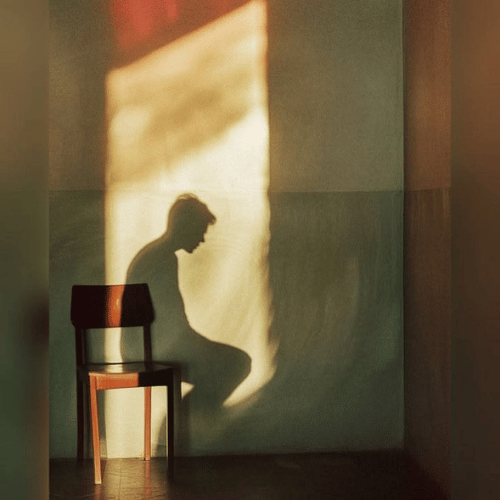

Is this the end?
I run on my little feet across the labyrinth-like house, Baba chasing me with an unconscious wasp in his hand, and I feel like I’m running for my life. The wasp suddenly seems bigger than it is. My unlaced shoes betray me like always and I trip on my feet. My eyes go shut. And I see no escape in sight.
The jarring alarm pulls me awake. The wasp is no more than a memory now. And I can’t recall when I last ran like that. Mondays happen to save me from nostalgia. I glance around, and the room feels bright, it’s almost too bright. A week’s old mugs sit by the table-side, and I facepalm myself. Perhaps to get away from the guilt or the eye-scorching light. I can’t decide.
The guilt is fleeting as I would hate missing my bus over it or worse, over a daydream. But then I haven’t missed it in the last five years. I always run up to it, but then it feels to me as if I’m always running. I said I hadn’t run for a while. I close my eyes, but the jolting bus and the eye scorching sun pulls me awake. I brush the hair away from my face, and the sun appears to be my nemesis.
Perhaps somewhere I preferred that wasp chase. Yet I’ll never admit it, as it will be followed by a grin on Baba’s face. “It builds courage, makes you dauntless,” he’d say. Yet the little me couldn’t have known that the wasp could never make me dauntless, because even when I ran, I knew. Knew he was always there. He wouldn’t let that wasp sting me. The wasps of work sting me now, and it’s a routine. Am I dauntless at all? The bus door opens, and the stuffy air hits my face as if it carries no oxygen, none at all.
A gloomy haze haunts my cabin. Its walls are decorated with the company slogan. “Aun publications. Where you find the best translators for your manuscript.” The best. I wasn’t so sure but they were. I look around, and find my coffee mugs from last week on the side-desk. A hollow draggy breath stirs in my chest but it fades before I can catch it. Settling into my chair, I glance around and find an envelope. It had been sitting there for a week. I close my eyes and remember typing back to Atif that I would look into what he was so enthusiastic about. It had been a month since then. I bring my palms to my face once again. Even when I’ve thought of quitting so many times. I always end up saying yes somehow. I told him I’d give it a read, can’t promise him anything, but I can’t help but feel responsible. And now the envelope haunts me in the cabin.
I put my coffee mug down, and the orange haze already paints my cabin window. No matter how much I avoid it, I always end up staying here till late. I click my laptop shut at last, grabbing the envelope along the way. The bus is quieter now, but calmer in no way at all. I can feel my palms all clammy. Was I clenching my fist? I can’t help but feel that I’ve left something behind. And the feeling has started to greet me often. And like always my stop arrives before the answer.
The alarm rings once again, it almost feels like background noise. I sit up regardless, I reach out to shut it off. I look around, and all I see is the envelope. And I can no longer look away. I snip it open. And my eyes land on a file that looks like a manuscript and a letter note. The file reads, Mariam’s Mail.
Mariam.
Salam Leila,
Tashakur for agreeing to give the letters a read. Amina has been grilling me to update her on what you make of them, and I have to tell her patience is a virtue. She was the one who found the letters and she’s more excited than I am. Excited enough to send me around the neighbourhood to ask for Mariam, in the middle of a hot day. The Iqbal family lived here before us, and that too almost forty years ago. They had three kids, including Mariam, Razzaq and Pari. She was the eldest of the siblings like my Amina. She lived here till her marriage, and just a few years after her marriage, her family had moved away, so as you may have guessed, they never got her letters. The owners did not lease the house for forty years. And we moved in a few months ago, and found the letters in the mail, which I assume are twenty-four in total. I’m not much into literature, but Amina is, and she was the one who read them to me. I hope you enjoy reading them as much as I did and Amina and I will be looking forward to hearing back from you.
Regards,
Atif and Amina.
P.S One of her letters includes contact information of a neighbor, I assume. Perhaps that may help you.
Atif’s voice finally quiets down. Saturday started to seem quite short all of a sudden. My shoulders feel tenser than usual. And I heave a sigh before finally tearing open the first letter.
“In moments, I feel my eyes have bled and painted this paper red, then I glance back again. And it’s brown. Brown as your skin. I remember your little hands hiding the anār behind your back. You were the only one who knew it was my favourite fruit. Your drooling mouth barely hid your own love for fasanjan. Hoping I’d cook it for once. My home is filled with the aroma of it today. It is Eid after all, and the aroma paints your silhouette over the dastarkhwan before it fades completely. I imagine you taller now, I have to reach up to pat your head. When cooking today, I left my eyes on the road, hoping the aroma would guide you to your aji. Through my schoolbook, I found our address. It’s been so long, Razzaq. Are you upset thinking I’ve forgotten you?”
A strange mist replaces the suffocation of my room. And I let the envelope sit aside. I had read of grief. Perhaps way too many times. But tonight, it feels as if grief stands before me with anār behind its back, ready to throw it at me any chance it gets. And I stare at it way too long. Too long to even remember when I dozed off. A haze consumes me, a strong blue one at that. They say grief is supposed to be blue. Is it? I can hardly make out its nature but it fills the room in slow coils. Perhaps it’s Mariam’s fasanjan. It colors me against my will.
“I cook well now. I recall your face, and thankfully, you’re still there, with a kafgir in your hand, blessing my ears with how bad of a cook I am. Maman, I miss seeing your face. I lie at night, the breeze sways me towards you. My hand reaches for your face, but I’m forced to wake up, and you’re gone, Maman. I see myself so close to you, yet you’re so far. I imagine my head in your lap. As you’d tell me tales of Nilofer, and you’d tell me my skin is just like hers. Pale as snow. Looking in the mirror, I see a ghost, Maman. I can’t see how you’d call her Nilofer. My eyes sit swollen on my face; they long to see you before they stop the storm. I wipe the swell away somehow to conceal it from the world, but no one notices at all. I wish I could extend my hand out the window and reach for you. But you made a daughter with small hands and big grieving eyes.”
I get up, unable to make out what time it is. I had fallen asleep while reading the letters. I look at the wall, and it’s 5 in the evening. I look around, and the mugs are no longer there; Mama had taken them away. How much time had I truly saved for my manuscripts by not putting them away, till Mama just takes pity on me and washes them anyway. The guilt melts me slightly, although she always says she can do them for me. I come out, and see Mama standing near the sink.
“I was going to wash the mugs.”
“I know. But don’t. Your hands are not made for chores,” she speaks, but the tears numb my hearing, and I’m thankful for once she’s facing the sink. Baba says he can work for me. Mama says my hands are fragile. To just run back when I feel like it.
How long I have been running, running towards them, but before they notice, I slip away. And once again, before she can look back, I slip back in again. Guess I’ve always been a runner. And then I think of Mariam at last, the crickets chirp outside, but my eyes are wide open. Was this what she had longed for? For someone to shoo her away, lecturing her about soft hands. She had stood by the window imagining it every night. For someone to grab her hand for once. Oh, how much pain you carried in you, Mariam. Now, when I look in the mirror, it screams ungrateful.
The morning light seeps through once again, and I get up slowly for once. The day passes by as usual. By noon I settle by the window. The winds move through my hair. And I recall how much I adored the April breeze. The month used to slip before I blinked. And now the winds seem cruel. My gaze lands on a journal by the bedside; it’s a set. I had forgotten I used to record my days. Perhaps they were interesting once.
The front of the journal reads 2013. I flip through it until I stop at a page.
A day in my life.
Dear Diary,
It’s a bright sunny day. April’s my favourite after all. And good news for you, I got an A grade for my translation of Rumi, the headmaster said he’ll publish this in the annual school magazine. Baba is boasting to his friends on the phone. And he bought me a vanilla sundae.
P.S I got stung by a wasp:/
Ok bye.
An A-grade assignment at school? So that’s what all of this was for. April was calmer then, and vanilla was still sweet. I set the journal aside at last. I think of Mariam. What she could’ve been if she lived in a different time. What her dreams would be. I think hard to make out what my own dreams were, but it’s all a blur. I don’t remember why I ended up becoming who I am today, and whether the twelve-year-old me would be at peace at all. Was this what she hoped for? And then what if it was, for my life is just a repetition.
Monday has arrived again. And I sit in my office, the envelope open in front of me. It had been almost forty years. Yet when my fingertips trace the paper, it shows no sign of decay. How could they decay at all? How could Mariam be left unheard?
1980. The envelope reads.
I close my eyes, and Mariam stands before me. I imagine her rosy-cheeked, green-eyed, and smiling. After another hefty day, I sit on my bed at last, the moonlight is seeping through the window, and the night somehow carries a calm. The neighbours are playing dreamer in the background, and for once, it feels calmer. My journal stares at me from afar. Despite being rejected once, it stares back with audacity. The calm night, however, makes the stare look familiar. I close my eyes, and I see the six-year-old me glaring at the cameraman for he decided to click me when I’ve just gotten a buzz cut against my will. And a smile paints my face. It had been long. I open my eyes, and I make out the color of the journal. It’s blue. Blue as a Robin’s egg. I finally take it out, flipping through once again, my fingers stop.
The title reads.
Dreams.
To climb a treehouse
To have a tea party on the rooftop.
To ride a bike.
To think back, our house only had one floor when I was a kid; I was an impractical teen indeed. And I had fallen so badly from the bike at twenty that I had just given up. Surprisingly, it doesn’t say to be a translator anywhere. It was all just a practical escape after all. I put the journal down, and glance at the envelope sitting on the desk. It’s been a week since Mariam first spoke to me.
“I look in the mirror and see you, you took after me, they would have said. So I clip my hair back, and when I’m alone, I see you in the mirror. The all grown up, Pari. I lift my hands to push your strands away, but you’re no longer there, too busy playing with your friends. Yet I wait for you to come back tired, and I’ll braid your hair, relieving you of the heat. Your fine strands glide along my rough hands like a puzzle piece. You run to Maman, fearing someone might steal your sherbet. I lie alone, and my heart swells up in your remembrance; it fills with liquid I have no one to let out to. I imagine you again, but you’re gone when I’m with company. And when you’re gone, I’m alone.
Saima has a landline now.
5478 9583”
The sun glares through the window glass. With my cabin humid, I crack the window open. It’s been a few weeks, yet I grow more used to her letters that I can’t think of the time when I’ll have none at all. I glance at the number at the end of the letter, I wonder why she addressed none of the letters at the start, neither said phone me at all.
My fingers tap the table as the ring echoes about four times before it’s picked up.
Salam? A voice echoes. I stop fidgeting.
Salam, is this Saima’s house?
Yes, that’s Maman joon. A reply comes after a brief pause.
I’m Leila. May I speak to her about something?
I fidget some more, and I can hear some mumbling across the phone, and it’s not long before she’s on the phone.
Alo? Her raspy old voice echoes.
Salam, I’m Leila. Do you happen to know someone named Mariam? Perhaps a neighbour of yours?
Mariam joon?
And so she starts narrating, compressing Mariam’s whole life into this one conversation.
Mariam, she was our neighbour. She was a beautiful woman when she first came here. I still remember the day she was dressed as a bride. All red. The only time she ever wore that color.
Her eyes grew hollower with the wait.
Wait for whom? Her family? I question knowing well but not enough at all.
Yes. She really… thought they would receive her letters and come meet her. At thirty, she became a hollow ghost. I still remember the time I used to visit her. She’d not eat much at all and would sit by the window all day. She was so young.
Her voice cracks almost.
She passed away?
I ask the obvious. Perhaps I had known. It had been long after all. But to think of her hollow at thirty makes the air feel suffocating all of a sudden.
Did you perhaps know her full name? I ask, my voice crackling.
It was Mariam Zaman.
I hung up the call shortly after. I sit by the table with countless questions in my mind, but somewhere I know they’re bound to remain unanswered just as they were for Mariam. All I’ve known was her name and the grief it carried underneath. Because of her letters, it’s as if I’ve known her forever. She had traded longevity for words. The more I read of you, Mariam. The more I’m consumed with grief. You paint my days with grief I never saw.
The night has fallen, and it carries a mist within. I move much slower through the drafts, as the tears are salty and contagious. It’s been a month, and I feel I’ve lived through Mariam’s journey along with her. A silent spectator. I seem cruel all of a sudden. I watch and wonder like everyone else. What she could’ve been. A poet, perhaps. Though I wish that the least for her. What were her dreams after all? But then I can’t figure out my own. I glance around, and my journal lies closer than usual today.
It was royal blue after all.
A day in my life.
Dear Diary,
I’m in bed right now, it’s chilly outside, I took off from school because I caught a cold. Mama stayed up all night to get my fever down. Baba brought yakhni for me; it was so yummy. And the worst thing happened today. You know the letters I translated for Baba; he took all my credit and said he read them himself to his friend. I hate when people steal my credit. He’s always the exception, though. He was smiling the whole time. And I can just do this every time and see him smile. I got the cheat code. That’s it. School tomorrow.
Bye
I put the journal down, my head leans back against the chair. I had forgotten this. His smile. It was there all along. This was the first time I had wanted to be a translator. Not when I won the prize, but this. To read out his texts for him, and then watch him take credit. It brought me more joy than I ever admitted. To be his personal, unpaid translator. To see his boastful smile. I loved it to the point of wanting to do it forever. And when I wonder that, I realise. He hasn’t asked me to do that in a while……
Mariam sits there. I see her writing in the candlelight, writing for no one to read at all. The reader she wished on every day was long gone. And then I see myself, translating for five years, yet they were not my readers. My reader was with me all the time. And I had lost my way to him.
“Your head props just around the radio in my imagination, you’re completely absorbed by the cricket-junun. With a thump, my head lies on the ground, and my vision is black. You run to me, and the last thing I see is your face, full of furrows. As if you’d lose me. And when I woke up, I saw myself on the bed, head aching, but I saw something that day that I had never seen before.
You were weeping. For the first time. I thought you had never learned to cry, Baba. With a cheeky smile, I called out your name. And you wiped the tears away, returning my smile.I fell from the stairs yesterday. My vision went black again, and when I woke up, this time you weren’t there anymore Baba. For what is this hosh that you are not here? It’s all black when I don’t see you. I don’t remember your face as clearly anymore, Baba, I don’t weep, for I know it’ll make you sad. For once, find me, Baba. Find me. For I have fallen.”
I put down the letters at last. This marked the twenty-fourth letter. In all different ways, I’ve seen you, Mariam, and I’ve found you longing for everyone dear to you. You stopped sending the letters, perhaps right before your death. Or perhaps even before that. I wonder what made it stop. Or perhaps you knew, from the first letter, that they wouldn’t be answered at all. I’ve made you wait too long, Mariam.
The night feels as if it has laid out music to decode for me. I’m good at interpreting after all. I step out of the room and catch Baba sitting in the living room, eyes squinted on his phone. And I’m twelve once again.
“Need my help reading that?” I sit by his side.
He looks back at me. “You must be busy with your work.”
“You are my work. After all, I can’t betray my first employer even when he didn’t pay me.
What is it?” I say, sitting on the couch.
“A poem my friend sent me.”
I take his phone, and it feels like an eternity. His browser opens up to poetseers.org, with a Rumi poem no less. My eyes run on the screen, and even when my eyes are sensitive to light, this one doesn’t seem blinding at all.
“Ten times you have taken this path to that House;
For once, from this house ascend to the roof.
That house is sublime: you have narrated of its form
Tell me of the signs of the House’s Lord!
Where is the bouquet of roses, if you have witnessed the garden?
Where is one pearl of existence, when you are of the Sea of God?
With all that, [know] your tribulation is your treasure!
Alas, the veil upon your treasure is you yourself.”
(Rumi)
Baba just smiles.
“You know I could’ve used Google Translate,” he says after a while.
“But you didn’t, because you know you’ll never find such a good unpaid munshi as myself.”
“I feel like it’s been so long since you were just this little and now look at you.”
“And I find you the same as when I left.”
The alarm rings in sync with the chirps outside. I glance at the desk. I remember washing the mugs with Mama last night after having rasmalai together. It is surprisingly bright today. As if the rain had washed away the walls. Baba calls me from downstairs, and he drops me off at work today. On the way, we stop for some ice cream. Well, Mama would be mad if she found out I had ice cream for breakfast. But Baba was always good at keeping secrets.
I step into my cabin, and the sunlight sets just at the right angle. My draft is progressing towards its end. And Mariam’s letters are slowly taking shape into a story. From what little I know, I’ve written so much as if I’ve always known her. And I still feel reluctant to say goodbye. I pick up the envelope when a piece of paper falls from my desk.
Was there a letter I missed?
“My Arman speak from within
For distance has separated us,
I wait and wait for you to show up
Then you’d look at me, preoccupied
And leave without a word
I think of seeing you…once.
Yet I’d still leave empty-handed.
Or I’d paint you somewhere and bury you inside.
For I’m incapable of recalling your face.
What would you look like?
For I’ve forgotten long ago.”
She addressed one letter after all.
My fingers glide on the keyboard, marking the end of the draft. And I mail it to the publishing desk. I type back to Atif.
Dear Atif,
I hope you and Amina are well, and I can’t thank you both enough for entrusting me with these letters. And I’m very pleased to tell you that I’m finished with my draft and upon a conversation with the editor we ended up publishing them as a story, written by my perception of what little I had of her. It will be published in both Persian and English. I’ll send you a copy when it arrives. I can’t help but feel sad that I’ve read all of them and have no more left. I’m very grateful for getting to translate her words. Let Amina know her patience will be rewarded. I hope I have lived up to her expectations.
Good regards,
Leila.
I lean back without closing my laptop. I opened the draft once again. Mariam had waited long enough.
Dear Mariam,
When I imagine you, I don’t imagine you grown, but instead the little you. With a cheeky smile at the anār in front of you. And I imagine you never had an aji to call upon. This is your aji writing, and I’m a bad one after all. It took me so long to write back, but perhaps I wanted to sit with you a little longer. For I couldn’t think of the time when the ink of your words would end, and I’d have no more to read. But Mariam joon, when I close my eyes and the night is calm, Laufey is playing in the background, I see you in Barzakh and smiling at last. You’re still little in a red dress that can never outshine your smile. And I’ve seen you guide me. When I was lost in the dark. In return, your aji will remember you, write to you, keep your secrets, and never let your words be forgotten at all.
Regards,
Aji.
Bio note:
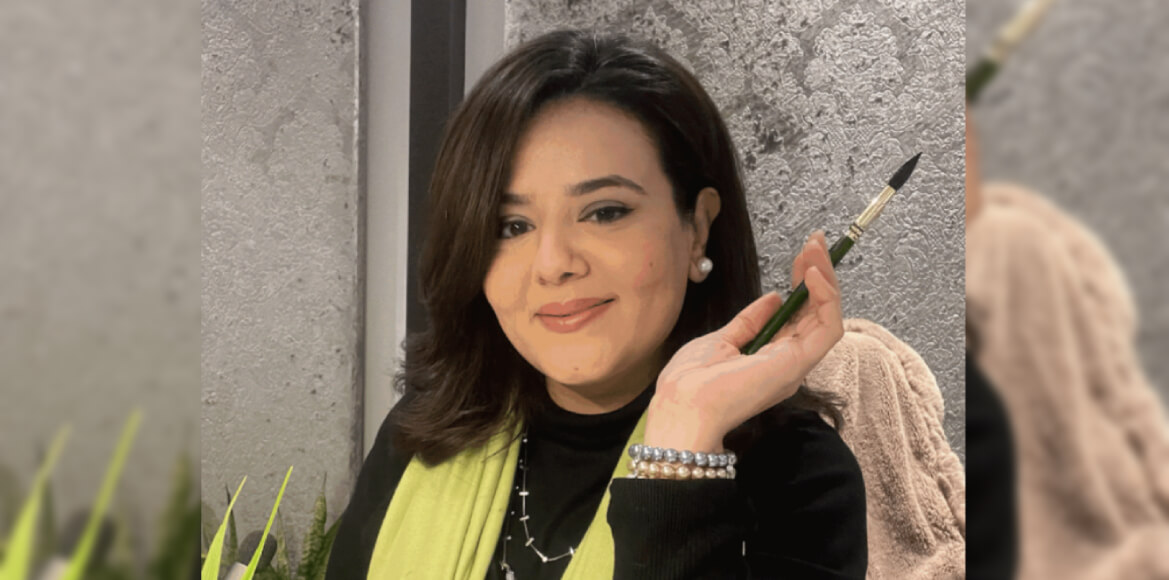
Ayesha Zubair is a twenty-year-old literature student at GCUF, with a weird fascination with tech these days. She believes “jack of all trades” is a very cool motto. She also works as her dad’s munshi, translating letters and other documents, an exercise that has inspired this story.